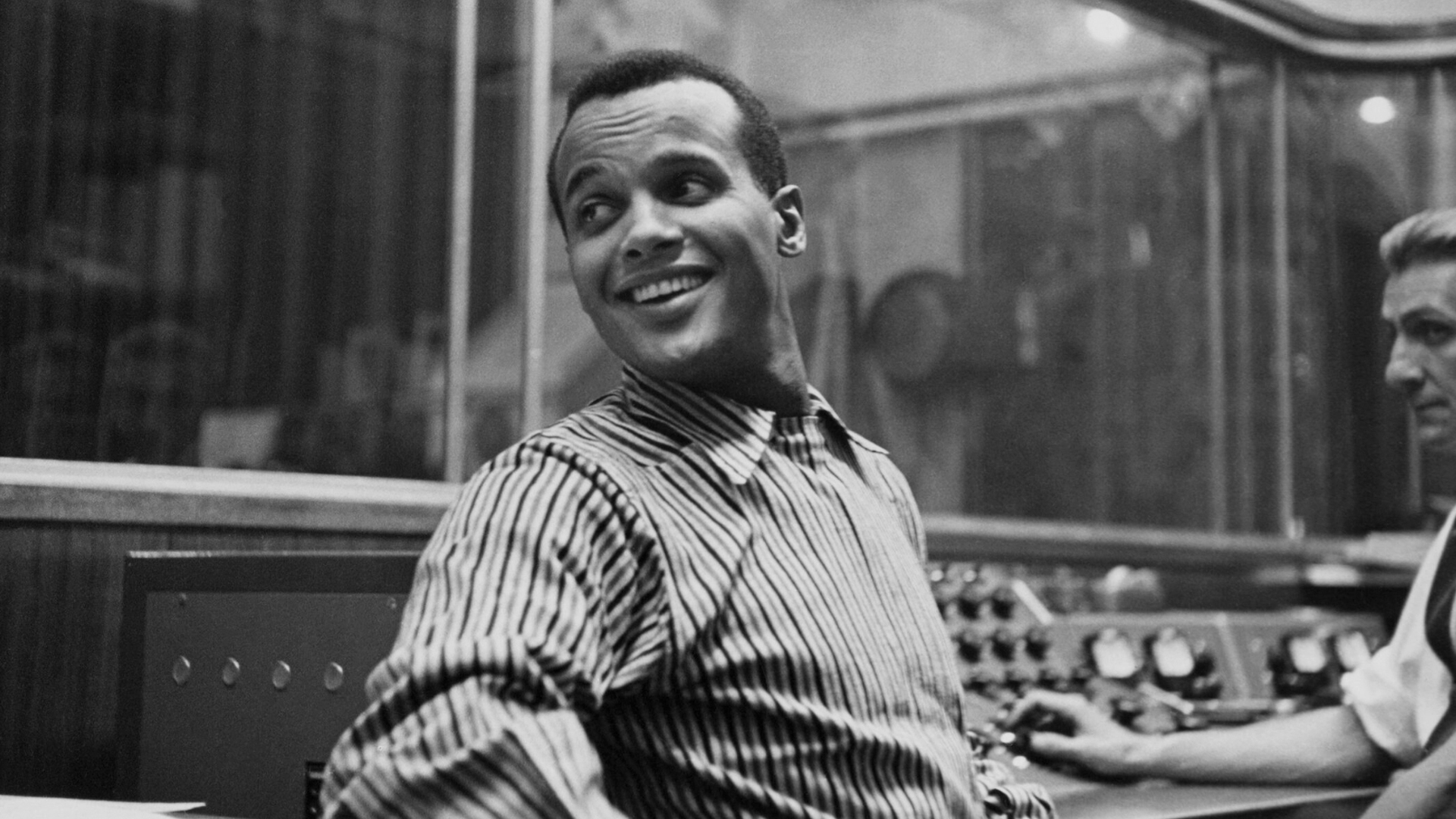

☗ Beloved civil rights activist, singer, actor, and Port Chicago Sailor Harry Belafonte spent his life fighting for equality and justice, notably advocating for civil rights for Black Americans in addition to other causes including poverty, apartheid, Aids in Africa, and justice for the Sailors of Port Chicago.
Born in Harlem on March 1, 1927, Belafonte, just one day after turning 17, enlisted to join the U.S. Navy to help his country fight overseas during World War II. In his 2011 memoir, My Song: A Memoir of Art, Race, and Defiance, Belafonte recalled his feelings upon hearing he was assigned to load munitions at Port Chicago Naval Magazine:
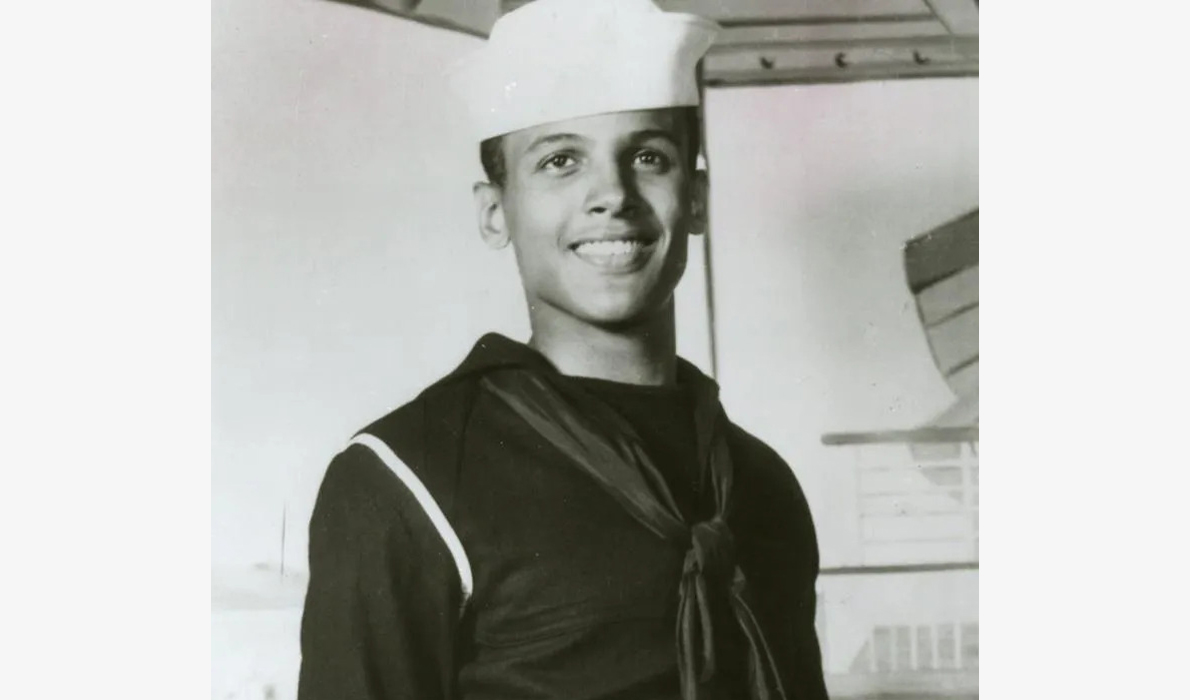
Belafonte witnessed the aftermath of the Port Chicago disaster of July 17, 1944, which killed 320 sailors, two-thirds of whom were Black, accounting for 15% of all Black American casualties during the war.
Belafonte recalled the Port Chicago 50 and the decimated Port Chicago Naval Magazine:
Within days, Belafonte was transferred from Port Chicago to munitions-loading duties in New Jersey. Belafonte said, "We'd still be storekeepers for munitions loaders, and still be handling live ammunition ourselves. But at least the New Jersey base hadn't blown up as yet."
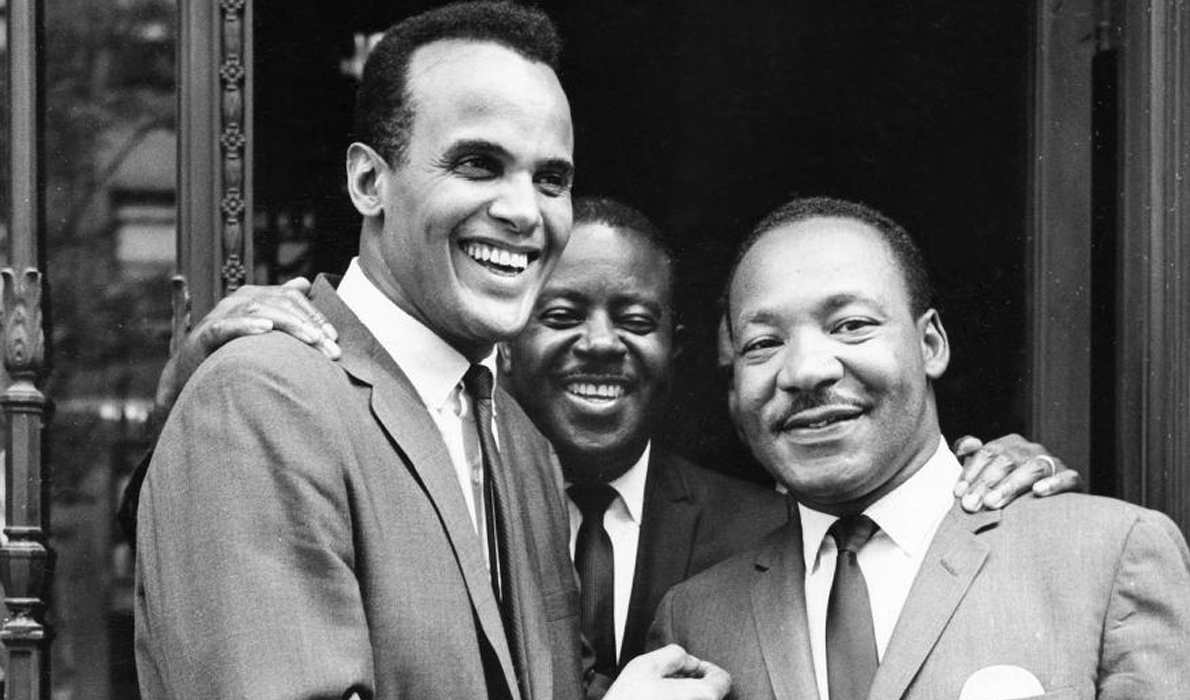
Belafonte would later achieve fame in the 1950s with groundbreaking roles in film and musical theater. His popular renditions of Caribbean folk and calypso songs would propel him to even greater heights, where he used his fame to fight for racial justice during the civil rights movement of the 1950s and '60s.
Despite his fame and status as a civil rights icon, Belafonte never stopped advocating for the Sailors of Port Chicago. In the 1990s, during pre-production on a planned film about the events surrounding the Port Chicago disaster, he spoke with the Los Angeles Times about the injustices the Port Chicago Sailors were subjected to: