History of Port Chicago

Explore the story of courage, sacrifice, and resilience that defined the Port Chicago Sailors and shaped America’s journey toward civil rights and equality.

By Port Chicago Alliance

Port Chicago

The Fight for Equality That Changed America


Summary: On August 9, 1944, after a catastrophic explosion at the Port Chicago Naval Magazine in California, 258 Black American servicemen refused to resume work under hazardous and racially segregated conditions. Their protest led to the largest mass mutiny trial in U.S. naval history.

Future Supreme Court Justice Thurgood Marshall—then a young attorney with the NAACP—investigated the case, condemned the trial as unjust, and helped expose the systemic discrimination faced by Black American servicemen. The protest of the Port Chicago Sailors, coupled with Marshall’s principled advocacy, forced a reckoning within the U.S. Navy, ultimately compelling it to dismantle its segregationist policies and become the first government institution to formally desegregate.


World War II
During World War II, over a million Black Americans served in the United States military, which at that time was racially segregated. In the Navy, Black Americans were often assigned the most grueling, dangerous, and labor-intensive jobs with limited opportunities for advancement or recognition.

At Port Chicago Naval Magazine, near Concord, California – 30 miles northeast of San Francisco – Black Sailors were exclusively assigned the hazardous task of loading bombs and ammunition onto cargo ships. They received no formal training, yet naval commanders prioritized speed over safety, even betting on which division could load the fastest. Sailors repeatedly raised concerns about safety, but their warnings, along with those from the Port Director and the Coast Guard, were dismissed.

The Port Chicago Disaster

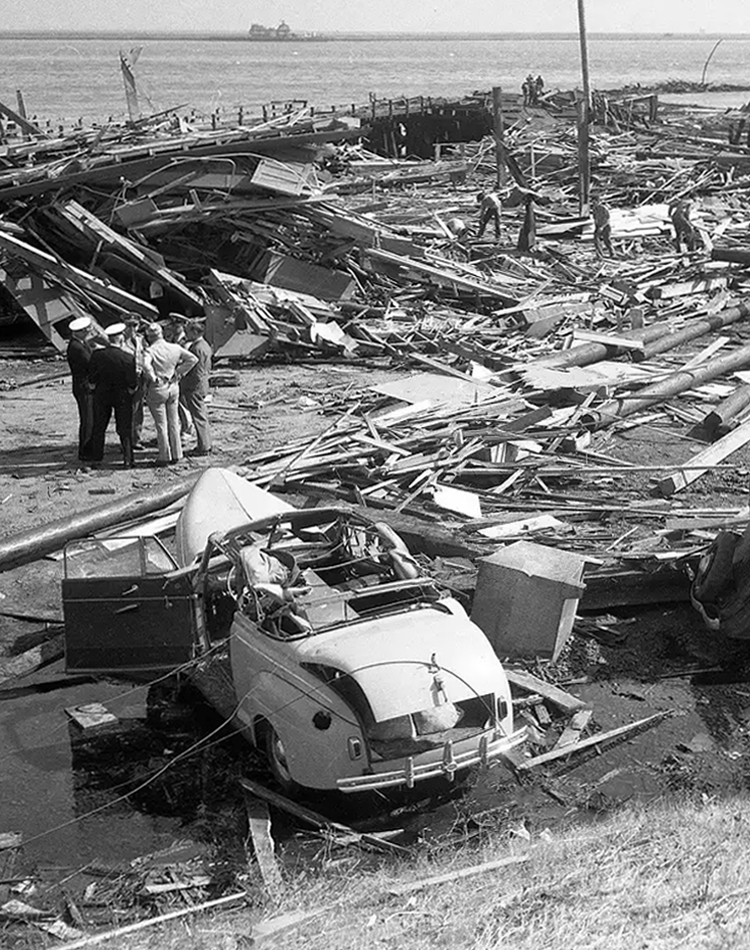
On July 17, 1944, as two naval cargo ships were being loaded with munitions, witnesses reported a rapid series of smaller detonations that built into a single, devastating blast that obliterated both vessels, sent a fireball nearly 12,000 feet into the air, and unleashed a shockwave strong enough to shatter windows 25 miles away. The blasts instantly killed everyone within 1000 feet, including 320 servicemen, merchant mariners, and civilian contractors. All those loading munitions at the time of the explosion were Black Americans, accounting for almost two thirds of the dead and amounting to 15% of all Black American military deaths during World War II.


It was the deadliest home front disaster of World War II.

Immediately after the explosion, amidst the tragedy and chaos, hundreds of surviving Black Sailors displayed exceptional courage, going above and beyond the call of duty to assist the injured and contain the damage caused by the blasts.

Aftermath of the Port Chicago Disaster

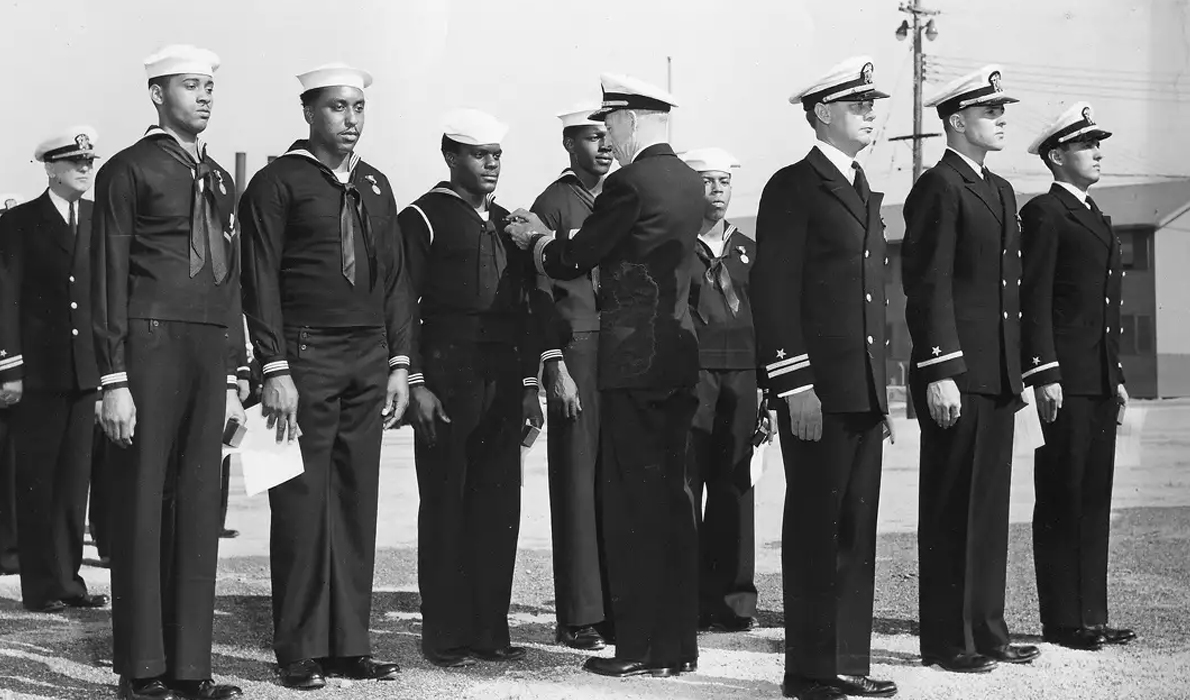
The Navy commended nearly 200 Black Sailors for their courage during rescue efforts, recognizing their actions as being “in accordance with our Service’s highest traditions.”

The Port Chicago Protest

Following the disaster, White officers were granted time off to recover, while the surviving Black Sailors were denied customary survivors' leave and ordered to clean up the naval base, including the grim task of recovering the remains of their fallen shipmates. After the cleanup, the men were transferred to the nearby Mare Island Naval Shipyard in Vallejo, where they remained under the same leadership that had overseen operations at Port Chicago.

Just three weeks after the explosions, and before an official investigation could determine the cause, hundreds of Black Sailors were ordered back to handling explosives with no additional safety measures or training, and no indication that Navy leadership intended to enforce existing safety regulations.

In an act of protest, 258 Sailors refused to resume loading ammunition under the same hazardous and discriminatory conditions. Navy officials confined them on a barge, where they were held under armed guard for three days.

Under threats of execution, 208 Sailors reluctantly agreed to return to duty, while fifty men held their ground, insisting that safety conditions be improved or that they be reassigned to other duties. They were formally charged with mutiny, resulting in the largest mutiny trial in United States history.


Thurgood Marshall

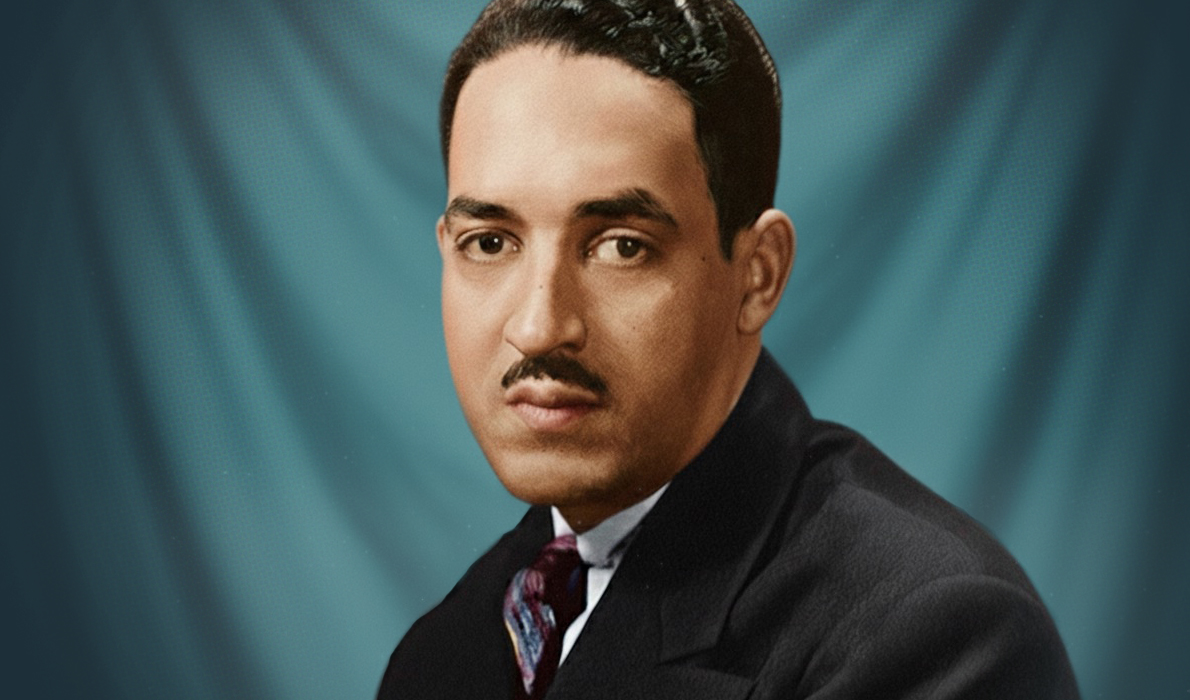
Thurgood Marshall, circa mid‑1940s.

“This is not 50 men on trial for mutiny, this is the Navy on trial for its whole vicious policy toward Negroes.”

- Thurgood Marshall

Future Supreme Court Justice Thurgood Marshall – who was then a young civil rights attorney for the NAACP – interviewed the Sailors, attended the trial, and denounced the proceedings as unjust, publicly questioning why Black Sailors were being singled out for the most perilous and back‑breaking assignments.

His bold public advocacy was instrumental in garnering widespread support for the accused Sailors, who became known as the Port Chicago 50. Despite the mounting public outcry and Marshall's powerful legal and moral arguments, the young men were all sentenced to 15 years in prison and a dishonorable discharge, a severe ruling that further fueled the controversy.


The Fight for Justice
Following the convictions, Marshall called for a formal government investigation into Port Chicago, and the NAACP drew on his interviews with the Sailors to craft a widely circulated Mutiny pamphlet. The publication helped to galvanize over 100 thousand signatures demanding the men's release and an end to segregation in the Navy.

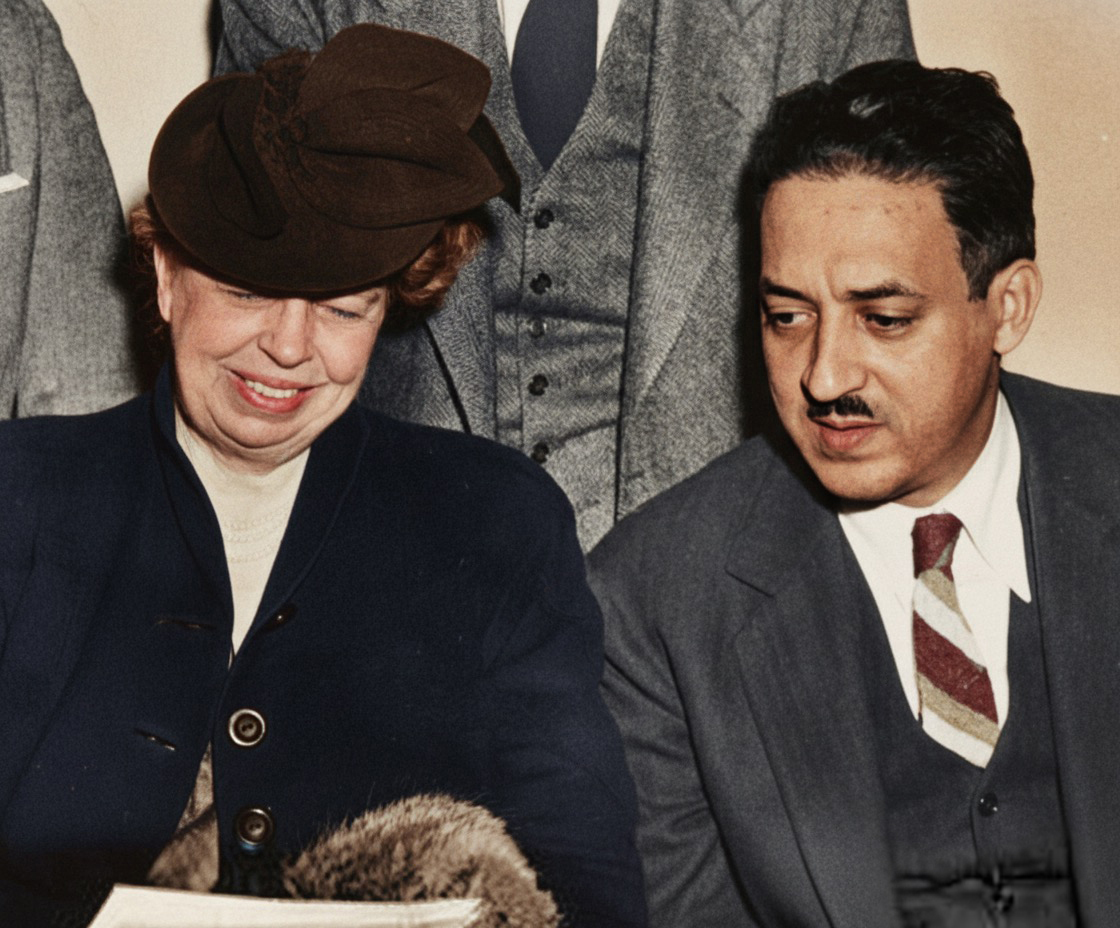
On April 3, 1945, Marshall formally appealed to the Navy’s Judge Advocate General, calling for the release of the Port Chicago 50. That same week, the NAACP delivered its pamphlet directly to the White House. Within days, after reading the pamphlet, First Lady Eleanor Roosevelt wrote to the Secretary of the Navy, voicing her support for Marshall’s appeal.

"I hope in the case of these boys, special care will be taken."

— Eleanor Roosevelt
Letter to Secretary of the Navy James Forrestal
April 8, 1945


Though the Navy publicly rejected Marshall’s appeal in June 1945, it quietly began acting on his recommendations to free the Sailors.

Four months later, a confidential Navy memo recommended that the Port Chicago 50 be released — but out of public view and without any formal acknowledgment. The memo warned that groups such as the NAACP had made the Sailors “look like martyrs,” and the Navy was determined to avoid any suggestion that their release resulted from outside pressure.

On January 9, 1946, the Navy quietly released the Sailors and returned them to active duty. A month later, under mounting public pressure sparked by the Port Chicago protest, subsequent military protests, and Marshall’s national appeal campaign, the Navy became the first federal institution to formally end racial segregation.

Legacy of Heroism
For decades, the Port Chicago 50 carried the burden of a conviction rooted not in justice, but in racial discrimination — condemned by a system that punished them for demanding dignity and basic rights from the Navy. That long-standing injustice gained renewed public attention in 1989 with the release of Dr. Robert L. Allen’s groundbreaking book The Port Chicago Mutiny, sparking a renewed movement for truth, accountability, and lasting recognition. In the decades that followed, historians, lawmakers, attorneys, civil rights organizations, and descendants united to tell the truth and demand accountability, building a movement that refused to let the Sailors’ courage and sacrifice be forgotten.

In 2024, on the 80th anniversary of the Port Chicago disaster, President Joe Biden and Vice President Kamala Harris joined the Navy in taking a historic step to right this wrong. Secretary of the Navy Carlos Del Toro officially exonerated the Port Chicago Sailors, clearing their records of all wrongdoing and fulfilling the justice that Marshall had fought for decades earlier. Though none of the Sailors lived to witness this moment, the nation at last honored their courage and affirmed their rightful place in civil rights history. ⚑


“The Port Chicago 50, and the hundreds who stood with them, may not be with us today, but their story lives on, a testament to the enduring power of courage and the unwavering pursuit of justice."

- 78th United States Secretary of the Navy, Carlos Del Toro
Scroll